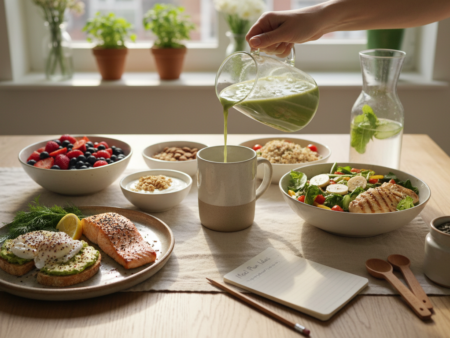
Planning your lunch or dinner plate according to the plate rule helps effectively ensure you get your daily serving of vegetables (at least three, more recommended). One serving of vegetables is about 100 grams, or a handful.
By following the plate rule, you can be sure that the proportions of different ingredients in a dish are correct. Also, be sure to always have foods of at least five colors on your plate.
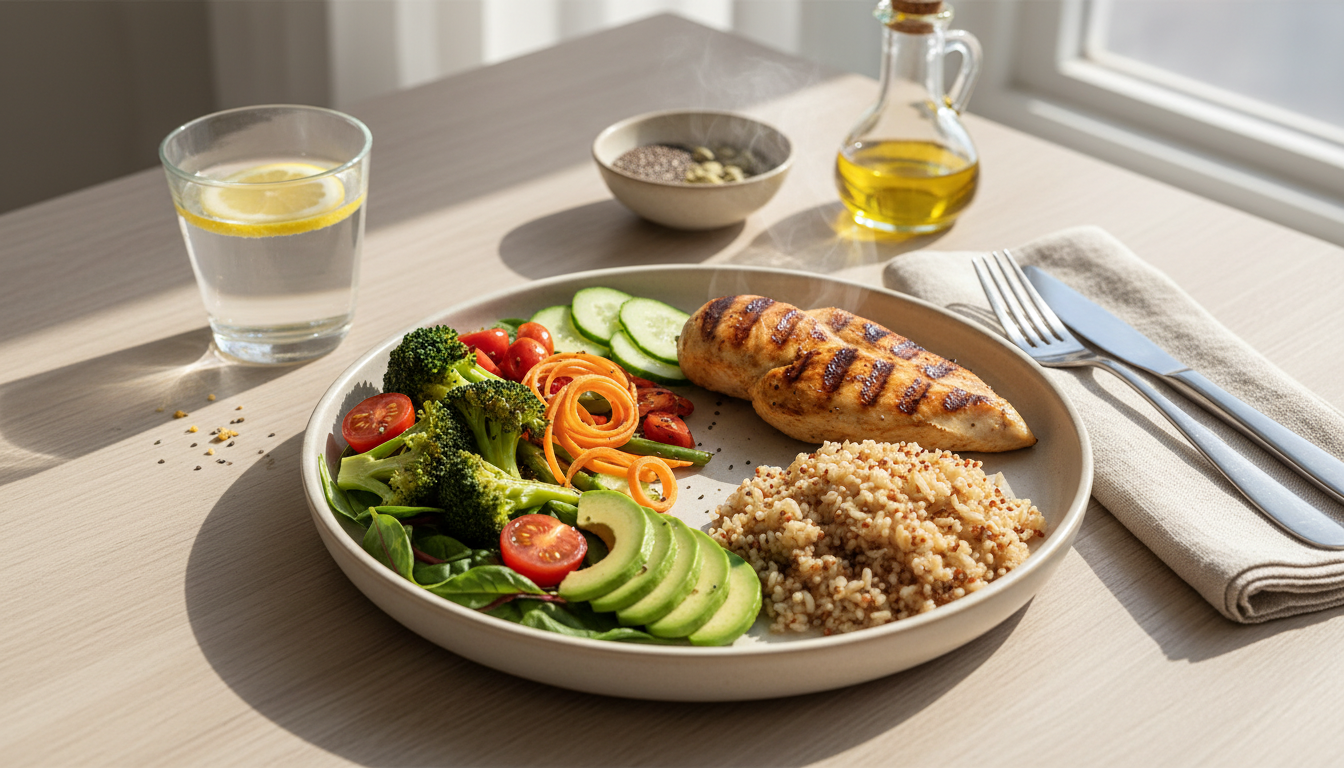
Plate Rule:
- Various salads or cooked vegetables should make up at least half the plate.
- Protein-rich foods, such as fish, meat (poultry), cottage cheese, legumes, etc., can make up about a quarter of the plate.
- Side dishes, such as buckwheat, potatoes, etc., should make up the remaining quarter of the plate.
Vegetables can also be substituted for the side dish. Legumes pair well with both vegetables and protein-rich foods.
- If it’s a mixed dish, such as risotto, lasagna, or casserole, vegetables should make up at least half the plate. The other half is reserved for the mixed food.
- To encourage children to eat more vegetables, you can decorate the plate in a more playful way, but still make sure that at least half of the plate is vegetables.
- Although legumes are considered vegetables, they are placed in the protein-rich section of the vegetarian plate. Half a plate of vegetables is also included.
- It’s also possible to follow the plate rule during the holidays; for example, beets, pumpkin, stew, or sauerkraut would all be nice additions to the Christmas table.
Even soup can be eaten according to the plate rule. Just make sure vegetables make up half the thick portion of the soup and the protein-rich portion (e.g., fish, poultry) makes up a quarter.