
Proper, healthy eating doesn’t mean a boring menu and swearing off delicious dishes. Quite the opposite! It implies balance, which can be achieved by eating a variety of foods and in just the right amounts. This way, your body will receive the necessary nutrients to stay healthy and active. That’s why no food is healthy or unhealthy, beneficial or harmful in and of itself. It all depends on portion size and frequency of eating. You can eat everything, but in the right quantities!
The food pyramid shows what we should eat less of and what we should eat more of.
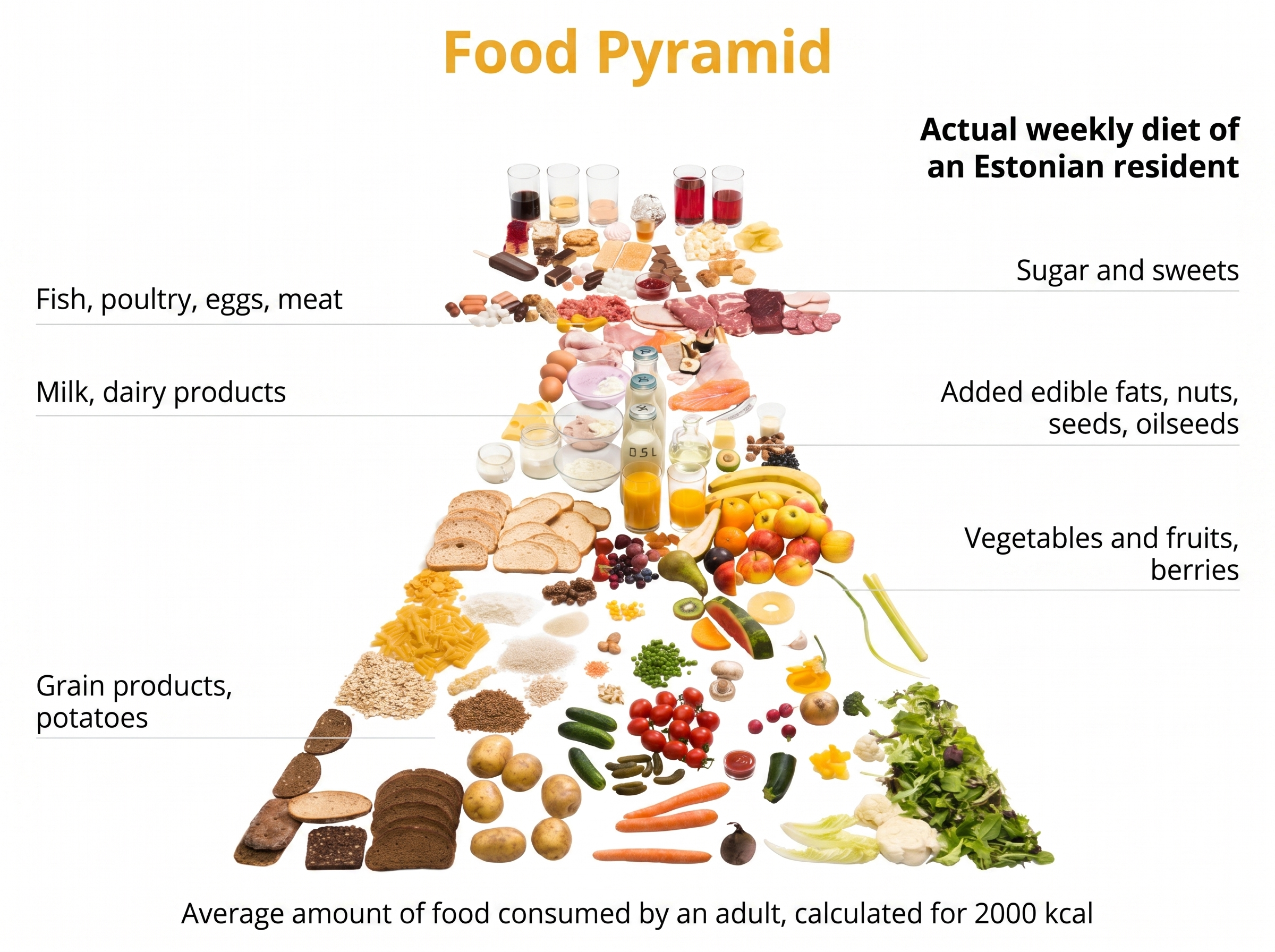
Yet, many of us eat an unbalanced diet, not as recommended, as evidenced by a study of eating behavior in Estonia. It’s no surprise that people don’t get enough nutrients.
Here you can compare two food pyramids.
One shows the recommended portion sizes that guarantee a balanced diet, while the other shows the actual diet of the average Estonian.
To ensure a balanced and varied diet, you should eat according to the recommended food pyramid above. This recommended pyramid shows the approximate amount of foods you should consume in one week to meet your nutrient needs. The pyramid lists five main food groups, and you should eat something from each of them daily. At the top of the pyramid are sweet and salty foods, which the body doesn’t need for proper functioning and should be eaten rarely, and then in small quantities.
What you should eat more of for a more balanced diet:
- whole grains (bread, cereals)
- vegetables, including legumes
- fruits and berries
- fresh, chilled, and frozen fish
- nuts and seeds
What you should eat less of:
- sweet dairy products, such as yogurt and curds
- pork and beef (especially products made from them, which are high in saturated fat and salt)
- sweet and salty snacks
- sugar-rich soft drinks and juices
The media is full of conflicting information about healthy eating. It’s important to avoid confusion and remember that there are no superfoods, genius diet plans, or magic bullets that are effective for achieving good health or losing weight over the long term.
The body needs to obtain from food both sufficient energy and all the necessary nutrients. An unbalanced, monotonous diet leads to nutrient deficiencies, which have a variety of effects on the body and can lead to serious illnesses.
One of the consequences of an unbalanced diet is weight problems: if the body doesn’t get the nutrients it needs from food, it forces us to eat more.
To ensure healthy and balanced nutrition:
- Eat as needed
Our body obtains the necessary nutrients and energy from food. Needs vary depending on age, gender, lifestyle, health, and many other factors.
The formula is simple: eat as much as your body requires and expends.
Energy is expended on basic activities (breathing, digestion, thinking, heart function, etc.), but it is also needed for movement. For example, adolescents have higher energy needs than older adults; during pregnancy and breastfeeding, nutrient needs increase; and people who perform physical labor require more energy than office workers. The average daily energy requirement is 2,000 kcal for women and 2,600 kcal for men.
2. Eat a balanced diet
It’s not just the energy you consume that’s important; it’s also about getting it from a variety of nutrients and balancing the proportions of these nutrients. Each nutrient plays a vital role in the body, and different food groups contain different essential nutrients, vitamins, and minerals.
Many people today, for example, are trying to reduce their carbohydrate intake, which can lead to deficiencies in certain essential nutrients.
3. You can eat everything in moderation.
It’s a common misconception that everything tasty is either unhealthy or leads to obesity. In reality, it’s not that bad: you can eat everything, but in the right amounts and with the right frequency. The five main food groups are equally important, but the food pyramid shows proportions based on their quantities. You should be especially careful with very salty, sweet, and fatty foods, as well as alcohol.
4. Eat a varied diet
A varied and balanced diet should include foods from different food groups, but it’s also important to vary foods within those groups. For example, different fruits and vegetables contain different vitamins and minerals in varying amounts. Eating a varied diet will help you get the nutrients you need, making your body healthier and more efficient.
Routine and habits are often the cause of a monotonous diet. It’s important to review your diet periodically to avoid eating the same thing all the time. A monotonous diet can also result from a conscious decision to avoid certain foods or because you don’t like them. In this case, you need to carefully ensure you’re getting the necessary nutrients from other sources.
When choosing food, it’s important to consider not only its health benefits but also its impact on the environment.
What, how much, and when we eat has a significant impact on the environment. By following dietary guidelines, you can significantly reduce the negative impact on the environment.
To reduce the environmental impact of your diet, adhere to the following principles:
- Choose foods that are biologically diverse, i.e., vary foods both between and within food groups;
- Choose foods that are produced as closely as possible, locally and seasonally whenever possible;
- When consuming meat, dairy, and related products, limit the amounts recommended in the nutritional guidelines;
- Try not to waste food and reduce food waste;
- Plan, prepare, store, and consume food mindfully, and be mindful of the broader impact of your habits.