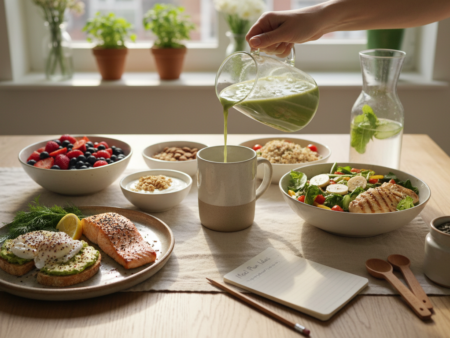
This drink is unmistakable: its rich color, thick texture, and special brewing ritual. It’s matcha, an amazing green powder that’s not brewed, but whipped into a thick, frothy drink. Its delicate flavor and deep color appeal to many, and its rich composition makes matcha a true superfood among teas.
Matcha (or matcha) is not just dried and ground leaves, but a whole philosophy that originated in the Zen Buddhist monasteries of Japan. Once, this drink was only available to the select few – monks and nobles who used Japanese powdered tea in meditative rituals to achieve a deep, calm state of concentration.
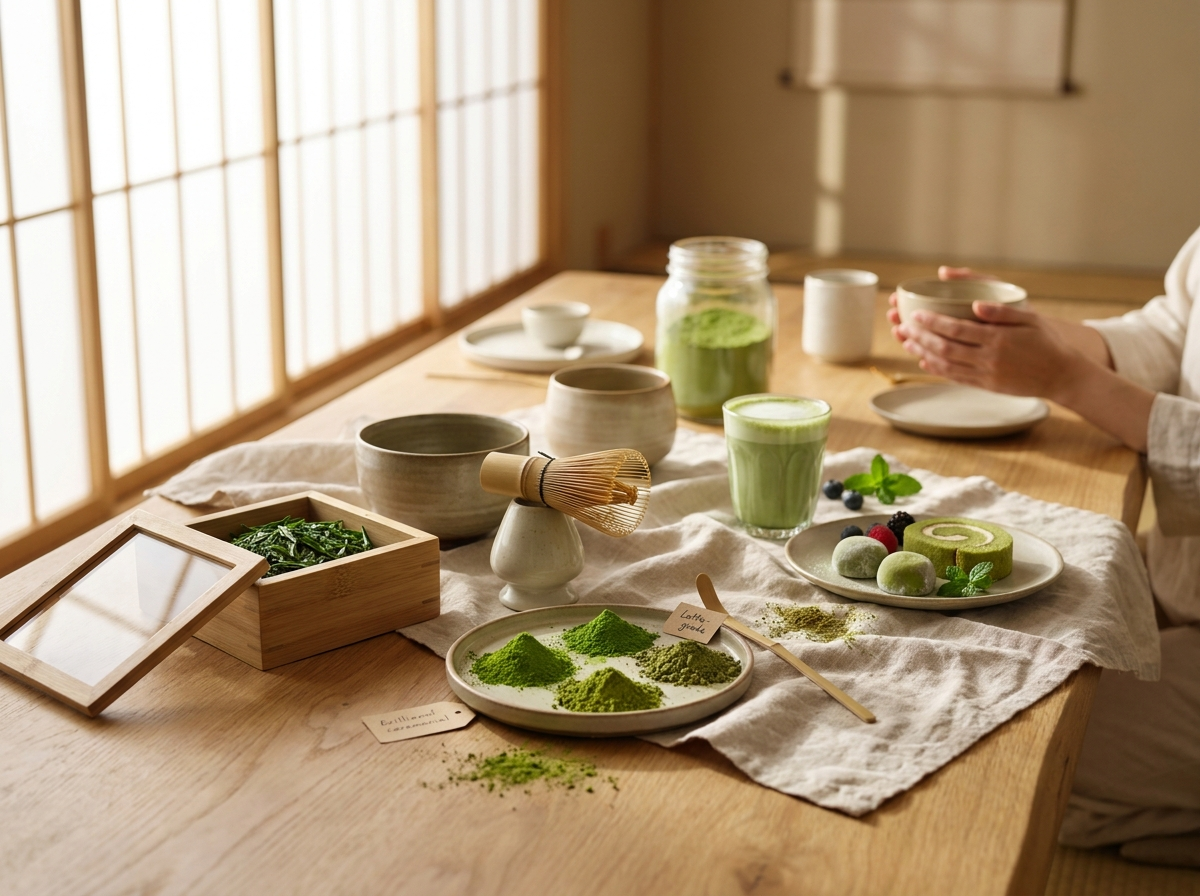
Unlike traditional teas, where the leaves are thrown away after brewing, with matcha you consume the tea leaves completely ground into the finest powder, which means you get up to 10 times more nutrients, antioxidants, and L-theanine. This unique feature turns it from a simple drink into a real “elixir” that holds the secrets of longevity, concentration and harmony.
In this article, we will analyze what matcha tea is, why this drink has become a symbol of the Japanese tea ceremony, and what are the real health benefits of matcha. We will also pay attention to the possible harm so that you can consume this drink consciously. And, of course, we will tell you in detail how to brew matcha correctly to reveal its full taste – from the classic version to modern cooking methods.
What is matcha tea: composition and types
Matcha is a powdered green tea that is made from the leaves of the same plant, Camellia sinensis, as other teas, but with key differences at every stage. What are the specifics of making this tea?
- Shading. About 20-30 days before harvesting, the tea bushes are completely covered with special bamboo or black nets. This is the most important stage. The lack of sunlight forces the plant to produce more chlorophyll, giving it that bright green color, and, most importantly, significantly increases the synthesis of L-theanine, an amino acid responsible for the sweet, grassy taste of umami.
- Harvesting. Only the youngest upper leaves are harvested.
- Steaming and drying. The leaves are steamed to stop oxidation, preserving the bright color and nutrients. Then they are dried.
- Removal of veins. After drying, all stems and veins are removed. The clean leaf plate that remains is called tencha (or tencha).
- Grinding. Tencha is slowly ground on stone millstones to a microscopically fine powder. This process is very slow. It takes about an hour to obtain 30 grams of matcha to avoid overheating and loss of aroma.
Thus, unlike regular tea, where we drink an infusion, in matcha tea we consume 100% of the tea leaf, making it a concentrate of nutrients.
The exceptional benefits of matcha are determined by the high concentration of several key components.
Table 1. Chemical composition of matcha tea.
| Component | Appointment | Effect |
| Catechins (EGCG) | Powerful antioxidants | Protects cells from oxidative stress and has anti-inflammatory properties. |
| L-theanine | Unique amino acid | Softens the effect of caffeine, promotes relaxation and improves concentration. |
| Caffeine (theine) | Alkaloid | Stimulates brain function. Thanks to L-theanine, caffeine is released slowly, preventing a sudden surge of energy followed by a decline. |
| Chlorophyll | Green pigment | Responsible for the green color and has a detox effect. |
| Vitamins A, C, E, K | “Catalysts” of metabolism | Supports immunity, skin and vascular health. |
| Minerals (potassium, calcium, iron, zinc) | Macro- and microelements | They participate in metabolic processes and the functioning of the nervous system. |
Match types
Matcha is classified by quality and purpose, which affects its price and taste.
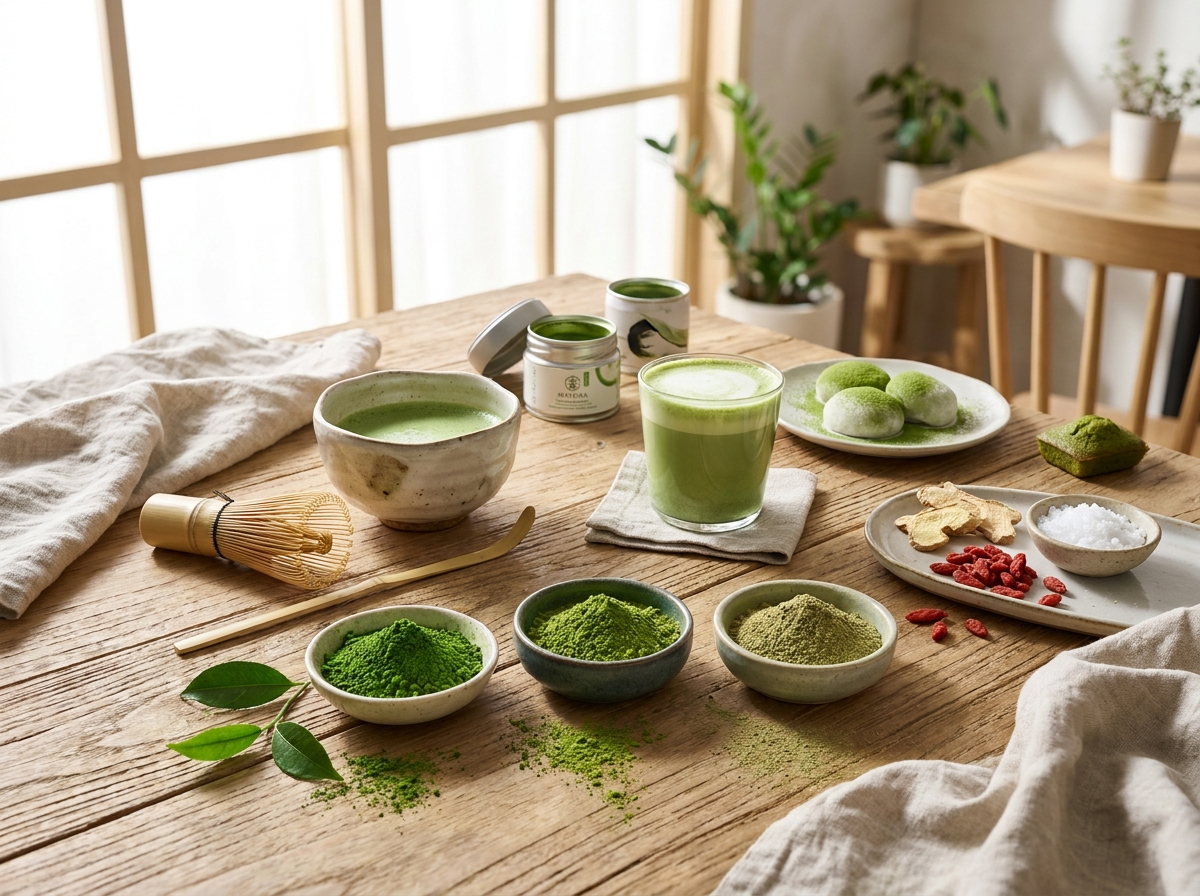
- Ceremonial matcha.
The highest quality tea, intended for the Japanese tea ceremony. It is made from the first, most tender spring harvest (ichibancha) in such regions of Japan as Uji, Nishio, Yame. Ceremonial matcha tea has a bright jade-green color, a sweet umami taste and a silky texture. It is drunk only in its pure form without additives.
- Premium matcha.
A tea with a richer, slightly tart taste. Goes well with milk and herbal drinks, ideal for matcha lattes, matcha cappuccinos and cocktails.
- Culinary matcha.
Used in baking, desserts, ice cream, smoothies. It has a coarser grind and a less bright color, but it perfectly conveys the taste and aroma during heat treatment.
Thus, when choosing, it is important to consider why you are buying matcha: for a tea ceremony, coffee drinks or culinary experiments. In this case, the quality and method of preparation play a decisive role.
Health benefits of matcha tea
Matcha tea is known for its numerous beneficial properties. This is an exceptional variety of green tea, in which the tea leaf is consumed in the form of a whole powder, therefore, the body receives significantly more active substances than with conventional brewing of leaves. What are the health benefits of matcha?
A rich source of antioxidants
Matcha contains a record number of catechins with antioxidant activity, and first of all, it is epigallocatechin gallate (EGCG) {1}. Antioxidants in matcha help neutralize the effects of free radicals, reducing the risk of premature cell destruction. The benefits of EGCG in matcha are associated with maintaining skin elasticity, strengthening immunity and reducing inflammatory processes in the body with regular use of this drink.
Powerful tonic effect
One of the most noticeable advantages of matcha is the optimal combination of caffeine and L-theanine. Unlike coffee, this drink does not cause sudden surges of energy and subsequent fatigue. Theanine softens the effect of caffeine, creating a steady state of concentration without nervousness and overload of the nervous system.
Positive effect on metabolism
Matcha often appears in studies related to weight loss and acceleration of metabolism {2}. Catechins activate the processes of thermogenesis – natural heat generation, which helps the body spend more energy even at rest. Due to this, the drink is included in healthy eating programs for weight correction and improving metabolic processes.
Detox effect and improved liver function
The high concentration of chlorophyll in matcha helps the body to more effectively remove metabolic products, supporting liver health. Chlorophyll binds and neutralizes some toxic compounds, participates in blood purification and helps normalize digestion.
Support for the cardiovascular system
Regular consumption of matcha has a positive effect on cholesterol levels and the condition of blood vessels. Catechins help reduce the concentration of LDL (“bad” cholesterol), improving the elasticity of blood vessel walls and maintaining healthy blood circulation {3}. This effect makes matcha a useful element of the diet for the prevention of atherosclerosis and maintaining cardiac activity.
Improved cognitive function
The combination of L-theanine, caffeine and antioxidants has a beneficial effect on brain function. These substances support memory, reaction speed and the ability to concentrate for a long time {4}. Many people use matcha as an alternative to coffee for work or study, when it is especially important to maintain mental clarity without overloading the nervous system.
Digestive support
Matcha promotes more harmonious functioning of the gastrointestinal tract. Chlorophyll and tannins gently regulate acidity, improve bile flow and support healthy microflora. The drink can be useful for feeling heaviness after eating, reduced bowel activity and general discomfort in the digestive system.
Possible harm and contraindications
Despite an extensive list of beneficial properties, matcha is a drink with a high concentration of biologically active substances. Therefore, if used improperly, it can cause a number of undesirable effects. Understanding the possible risks will help you safely include matcha in your daily diet and avoid discomfort.
High caffeine content
Matcha contains more caffeine than most types of green tea. For most people, a moderate dose is well tolerated, but a sensitive nervous system may react to strong matcha tea with anxiety, rapid heartbeat, or sleep disturbance. These effects are especially noticeable if you drink matcha on an empty stomach or in the evening.
Stomach problems are possible
In some people, matcha can irritate the stomach lining. Concentrated tannins and caffeine provoke heartburn, cramps, or increased acidity. People with gastritis, ulcers, reflux, or stomach sensitivity should drink the drink after meals and in small quantities to minimize risks.
Increased liver strain with excessive consumption
Although matcha is often mentioned in the context of a detox effect, excessive amounts of green tea can create additional strain on the liver. This does not apply to moderate doses, but daily consumption of large amounts of matcha (about 10 servings per day) potentially increases the risk of elevated liver enzymes and worsening well-being.
Risk of iron deficiency
Tannins contained in matcha can reduce the absorption of iron from food. For a healthy body, this is not critical, but people with low ferritin levels, pregnant women and vegetarians should consider this factor. To reduce the effect of tannins, it is recommended to drink matcha between meals, and not immediately after meals.
Allergic reaction is possible
Although allergies to matcha are rare, they can occur in people sensitive to other types of tea due to the content of substances such as tannins and caffeine. Symptoms include itching, skin rash, and sore throat. If these symptoms occur, the drink should be discontinued.
Effects on blood pressure
Caffeine can temporarily increase blood pressure, so people with severe hypertension should be careful. Matcha is often well tolerated in small doses, but if your blood pressure is unstable, it is best to consult a doctor.
Drug interactions
Matcha may affect the effectiveness of some medications, especially those that affect the nervous system, thin the blood, or regulate blood pressure.
Therefore, people with increased sensitivity to caffeine, pregnant women, patients with hypertension, and chronic gastrointestinal diseases, as well as those taking medications containing stimulants or anticoagulants, are advised to consult a doctor before use.
It is also important to observe moderation. 2-3 cups of matcha per day are considered optimal to avoid side effects.
How to properly prepare matcha tea
Proper preparation of matcha is the key to the rich taste and benefits of the resulting drink. Unlike regular tea, which is brewed by infusing tea leaves, matcha powder is whipped in water, achieving a homogeneous structure. Below are the main stages and recommendations that will help you prepare a quality drink at home.
Traditional matcha tea can be prepared in two main ways:
- Usutya (or usucha) – “thin tea”. The most common method. 1-2 grams of powder is used per 70 ml of water. It is whipped to a light foam.
- Koitya (or koicha) – “thick tea”. Twice as much matcha (4 g) is used for a smaller amount of water. The result is a thick drink that does not whip to a foam. Requires only the highest quality ceremonial matcha.
In this case, the traditional Japanese ceremony uses special utensils:
- chawan – a wide tea bowl, where it is convenient to whip the drink;
- chasaku – a bamboo spoon that allows you to accurately measure the amount of powder;
- chasen – a bamboo whisk that creates the famous matcha foam.
However, for home use, it is enough to have a bowl or a bowl with a wide mouth and a whisk (even a kitchen whisk). However, the quality of the whisk determines how airy and smooth the texture will be.
One of the most important factors in preparing matcha is the temperature of the water. Matcha should not be poured with boiling water, otherwise the taste will become bitter, and the beneficial substances will be destroyed. The optimal water temperature for obtaining a mild sweetish taste is 70-75°C.
Step-by-step process of preparing matcha:
- Sift the powder.
This process will help get rid of lumps and make the finished drink smoother and silkier. This is especially important for ceremonial matcha.
- Pour the powder into a bowl.
How much powder to use? A standard portion for classic matcha tea is about 1-2 g of powder (approximately 1 bamboo spoon). For a richer taste, characteristic of koicha (thick matcha), the dosage is increased by 2-3 times.
- Add a little hot water.
Pour 20-30 ml of water to obtain a paste. This helps to evenly dissolve the powder and avoid lumps. Use filtered or soft water, it reveals the taste better.
- Beat with a whisk.
The movements should be quick and rhythmic, in the shape of the letter “W” or “M”. The main task is to achieve a homogeneous emulsion and light foam on the surface.
- Add the remaining water.
Add another 100-120 ml of water of the desired temperature and beat again for a uniform texture.
The result is a classic version of usuch – a light, airy drink with a rich aroma and soft foam.
How to make tea with milk? Matcha latte recipe
Matcha latte confidently takes its place on the menu of modern cafes, attracting lovers of new and unusual tastes. After getting acquainted with matcha latte in your favorite coffee shop, many people wonder how to repeat this drink at home. Making matcha latte at home is quite simple, just a few ingredients and a little time are enough.
Ingredients:
- matcha powder – 2-4 g;
- hot water – 30-60 ml (temperature about 70-80°C);
- milk – 120-150 ml (you can use oat, almond or coconut milk);
- sugar, syrup or honey, if desired.
Preparation:
Whisk matcha powder in hot water with W-shaped movements until smooth.
Heat the milk to 60-65°C, froth with a whisk or simply whisk with a cappuccino maker. If you want to sweeten the drink, add sugar, honey or syrup to the milk.
Carefully combine the matcha with the milk. To do this, pour the whipped milk into a tall glass or mug. Carefully, in a thin stream, pour the prepared matcha mixture over the milk. Enjoy the finished drink!
If you want to discover the world of Japanese green tea, matcha tea will be an excellent choice. Whether it is morning or afternoon, this drink can give you vigor, concentration and inspiration at the same time. The main thing is to choose the right matcha tea, so that not only you feel the harmony of taste, but also benefit the body. Be healthy!